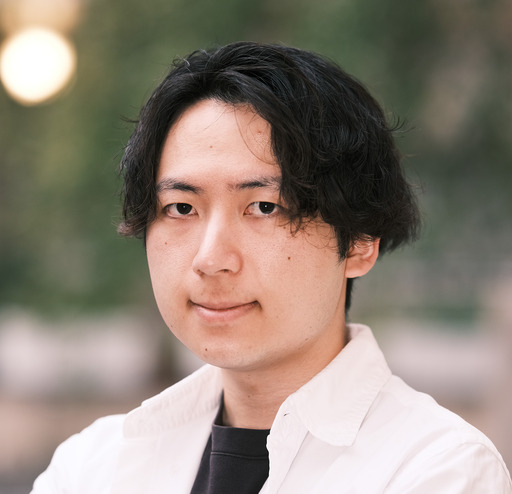
Two awards at MIRU 2025
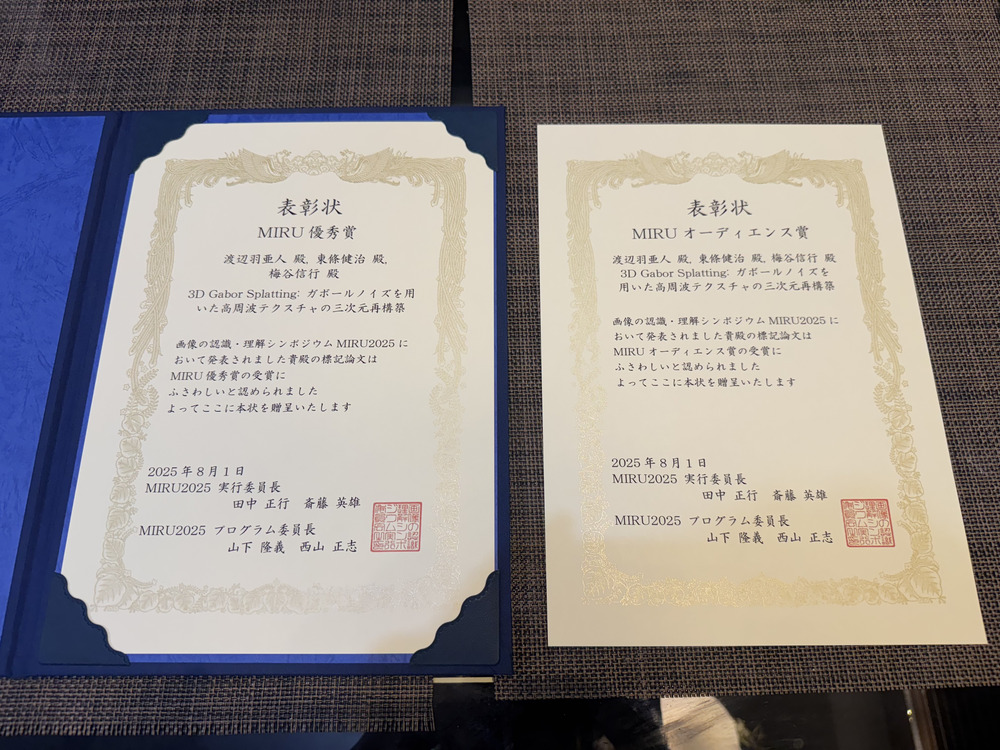
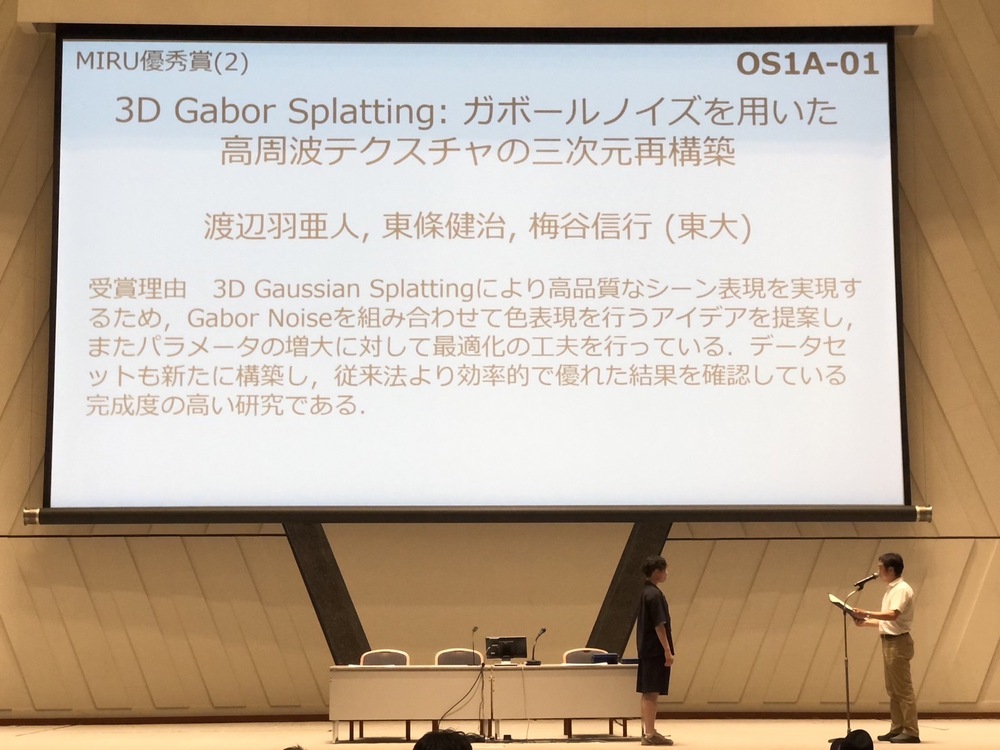
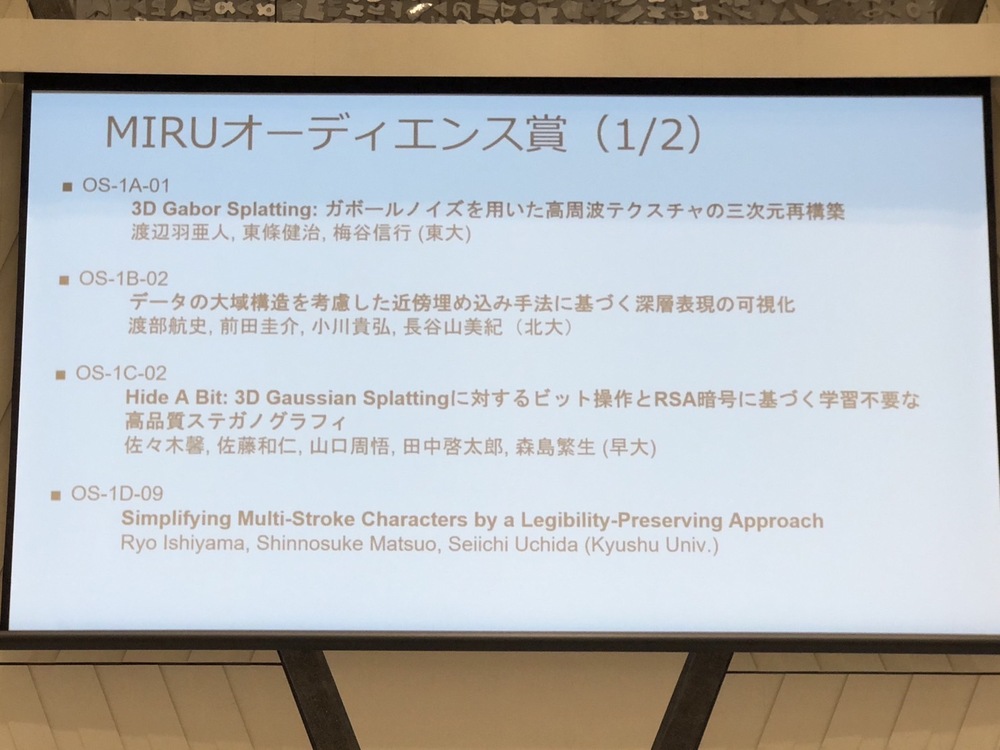
Our work, 3D Gabor Splatting, received the Excellent Paper Award and Audience Award at MIRU 2025. The research was a collaboration with Kenji Tojo and Nobuyuki Umetani.
MIRU is Japan’s largest domestic conference on image recognition and understanding. The 2025 meeting took place at Kyoto International Conference Center from July 29 to August 1. We had previously presented this work as a short paper at Eurographics 2025, and MIRU was an opportunity to share it with Japan’s computer vision community.
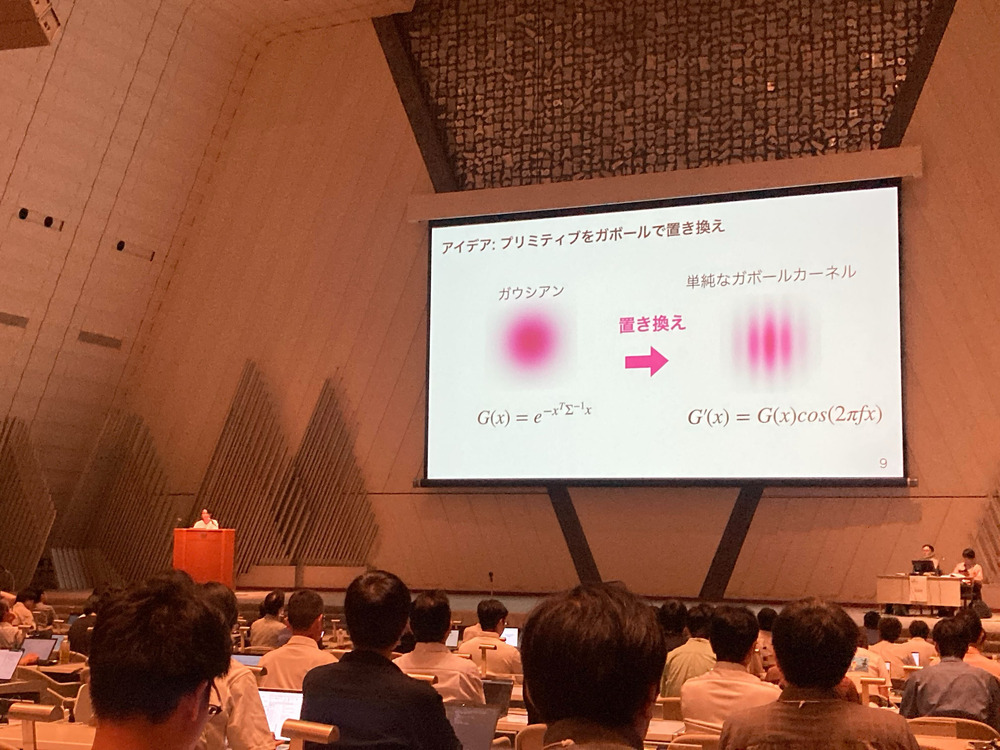
The presentation and awards
The Excellent Paper Award citation highlighted the completeness of the work, from the Gabor-based representation and optimization to the new dataset and experimental results.
The Audience Award was decided by participant votes among the oral presentations. I like to think that it reflected how clearly I was able to communicate the ideas behind the research.
These were my first research awards, so receiving both was especially meaningful to me. As a bonus, I also received some delicious Japanese sake as a prize.
About the research
Fine stripes and woven fabrics are difficult to reconstruct with conventional Gaussian splatting. From a fixed viewing direction, each Gaussian has a single color, so representing these patterns can require many small primitives.
3D Gabor Splatting introduces Gabor noise into the representation, allowing color to vary within each primitive. By combining a Gaussian envelope with wave functions, it can represent fine surface patterns directly. This helps reconstruct the high-frequency textures that give fabrics and other objects their detail.
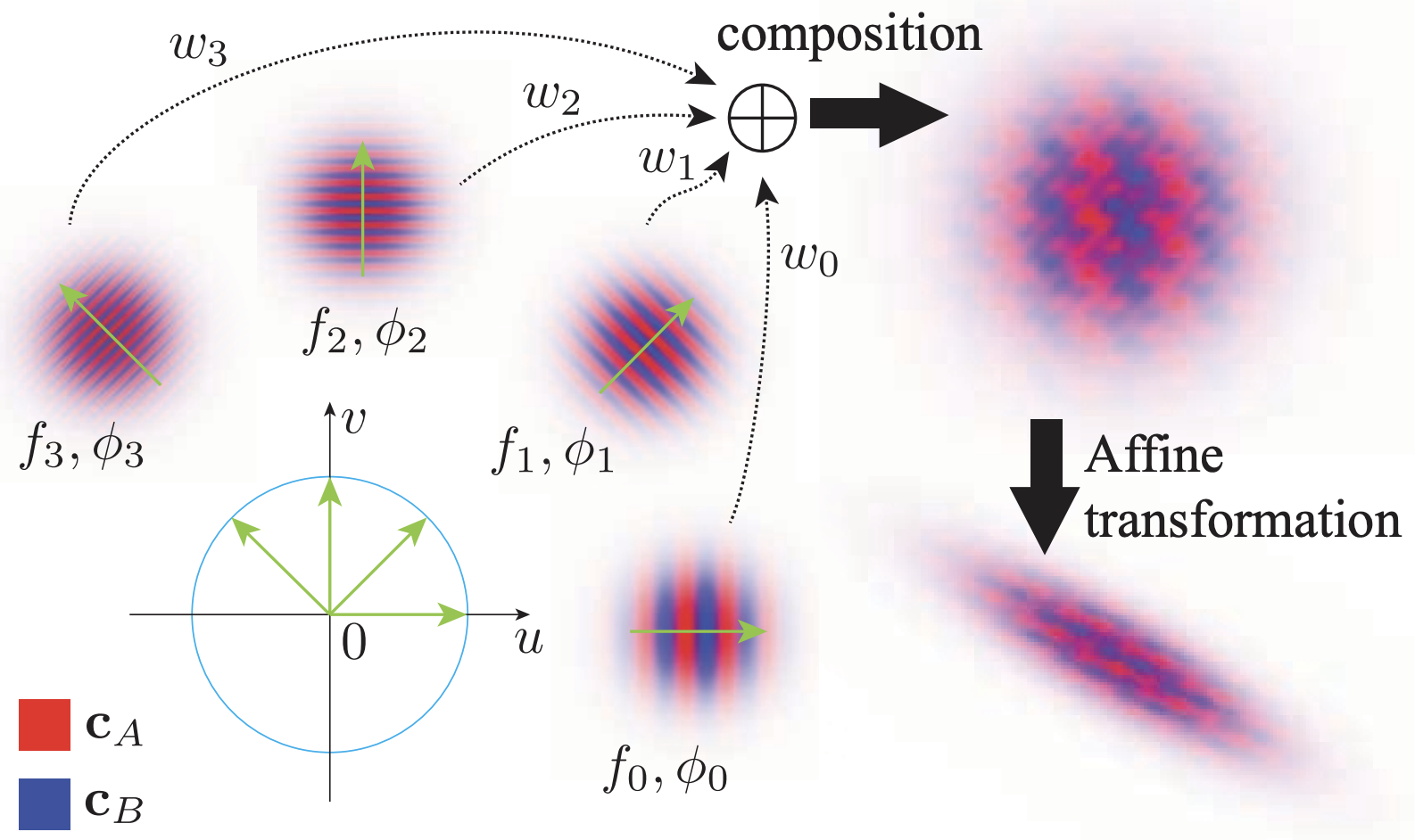
The project page includes visual comparisons and reconstruction results. The paper and code are also available.